
Training hard, lifting heavy, and pushing limits are often seen as the keys to progress. But there’s another performance factor that is just as critical — and often underestimated: sleep. Many athletes sacrifice sleep in the name of productivity, social commitments, or extra training, yet research consistently shows that sleep is a foundation for recovery, performance, and injury prevention.
One landmark study published in the Journal of Pediatric Orthopaedics revealed a direct relationship between chronic sleep deprivation and increased injury risk in young athletes. This article breaks down the study, explains the physiological reasons behind this link, and provides practical strategies to help athletes use sleep as a powerful recovery tool.
What the Science Says About Sleep and Sports Injuries
The 2014 study by Milewski et al. explored the connection between average sleep duration and sports injuries in adolescent athletes. The researchers followed 112 athletes (ages 13–18) from multiple sports over an entire competitive season, collecting data on sleep habits, training volume, screen time, and injury occurrence.
Fewer Hours, More Injuries
The findings were striking:
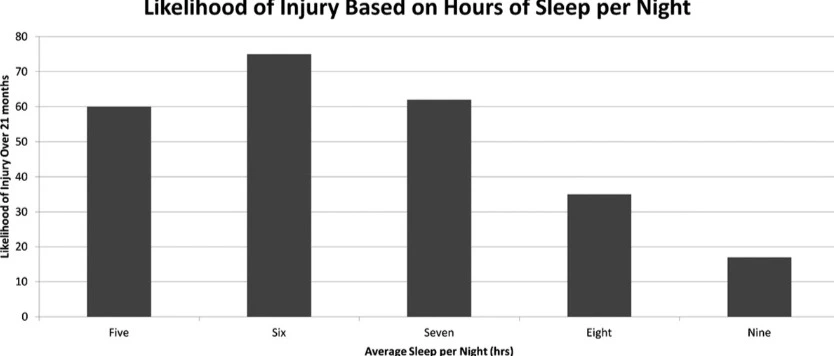
Athletes sleeping fewer than eight hours per night were 1.7 times more likely to experience a sports injury.
This association remained strong even after adjusting for training load, sport type, age, and gender.
Athletes sleeping only five to six hours per night showed the highest injury likelihood — nearly 70–75% over the observation period. In contrast, those consistently sleeping eight to nine hours had injury rates under 20%.
The message is clear: sleep is active injury prevention, not just a recovery luxury.
Sleep Duration as the Strongest Predictor
Among all the variables analyzed, sleep duration emerged as the most powerful predictor of injury risk — more significant than training hours, sport specialization, or previous experience. Athletes with insufficient sleep were at higher risk across all categories.
Types of Injuries Observed
Common injuries included:
- sprains
- muscle strains
- stress fractures
- acute traumatic injuries
Sleep-deprived athletes not only experienced more injuries but also required longer recovery periods, leading to more missed training sessions and competitive downtime.
Why Poor Sleep Increases the Risk of Injuries
The link between poor sleep and injury risk has strong biological foundations. Sleep influences tissue repair, hormonal balance, brain function, and neuromuscular control — all essential elements of athletic performance.
1. Compromised Tissue Recovery
During deep (slow-wave) sleep, the body releases growth hormone (GH) — crucial for muscle repair, tendon recovery, and bone remodeling. Reduced sleep leads to lower GH release, limiting the body’s ability to recover microdamage from training. Over time, microtraumas accumulate, increasing the likelihood of overuse injuries.
2. Hormonal and Inflammatory Changes
CChronic sleep deprivation alters key hormones:
- Higher cortisol → breaks down muscle tissue
- Lower testosterone & IGF-1 → slower repair and adaptation
- Elevated inflammation markers → delayed healing
This hormonal environment reduces resilience and elevates injury risk.
3. Reduced Neuromotor Performance
Even one poor night of sleep can impair:
- reaction time
- coordination
- balance
- decision-making
For athletes, this translates to technical errors, slower responses, and compromised movement quality — all of which contribute to acute injuries.
4. Impaired Proprioception and Postural Control
Fatigue also affects the body’s proprioceptive system. Reduced postural awareness increases the likelihood of missed steps, misaligned landings, twisted ankles, and form breakdown under fatigue.
Practical Sleep Tips for Athletes
Improving sleep doesn’t require drastic changes. These proven strategies help enhance both sleep quality and duration:
- Establish a consistent sleep schedule (even on weekends).
- Reduce screen time at least one hour before bed.
- Avoid caffeine, alcohol, and heavy meals in the evening.
- Keep the room cool, dark, and quiet.
- Use a wind-down routine such as stretching, breathing exercises, or light reading.
By treating sleep as part of the training plan — not something optional — athletes can significantly reduce their risk of injury.
Practical Recommendations for Coaches, Clubs, and Medical Teams
Based on current evidence:
- Coaches should educate athletes on sleep as a performance factor.
- Sports clubs should integrate sleep hygiene programs into athlete development.
- Medical and physiotherapy teams should monitor sleep when managing injuries.
A holistic approach to sleep can dramatically improve both performance and athlete longevity.
Final Thoughts
The evidence is clear: sleep is a cornerstone of athletic health. The study by Milewski et al. (2014) confirms that athletes averaging fewer than eight hours of sleep face significantly higher injury risks. Poor sleep disrupts tissue repair, hormonal balance, neuromotor function, and proprioception — making injuries not only more frequent but also harder to recover from.
For athletes and active individuals, improving sleep may be the simplest and most effective way to stay healthy, recover faster, and perform at peak levels. Sleep isn’t wasted time — it’s training time.
Reference
Milewski, M.D., Skaggs, D.L., Bishop, G.A., Pace, J.L., Ibrahim, D.A., Wren, T.A., & Barzdukas, A. (2014). Chronic Lack of Sleep is Associated with Increased Sports Injuries in Adolescent Athletes. Journal of Pediatric Orthopaedics, 34(2): 129–133. https://doi.org/10.1097/BPO.0000000000000151