

What Is Hyrox?
Hyrox Training is often described as the “marathon of functional fitness.” It’s a race format where every athlete completes the same challenge: 8 × 1 km runs, each followed by a workout station. Stations include the sled push, sled pull, burpee broad jumps, rowing, farmer carry, sandbag lunges, ski erg, and wall balls.
Unlike other competitions, Hyrox Training is standardized worldwide. Whether you compete in New York, London, or Berlin, the race is identical. That makes Hyrox Training preparation straightforward and purposeful.
This combination of endurance and strength is what makes Hyrox unique — and why a 12-week structured training plan is essential.
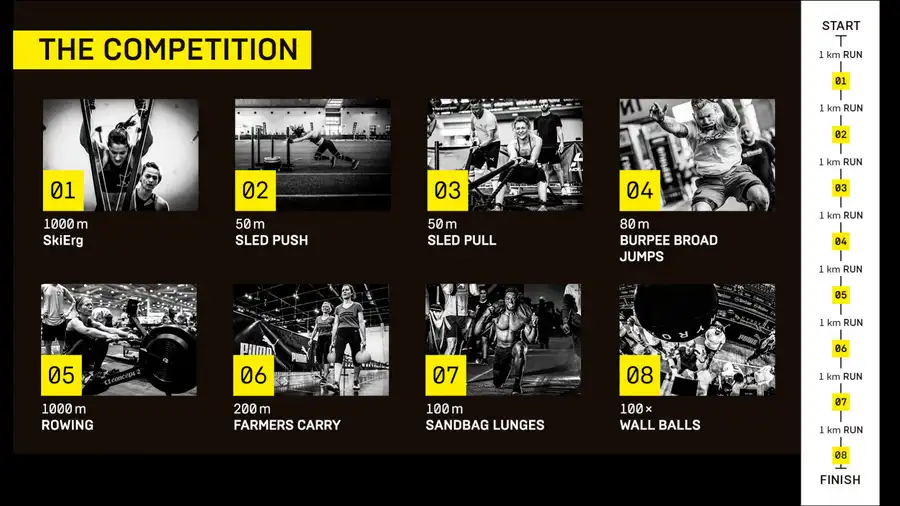
Image credit: HYROX Official (hyrox.com)
Why a 12-Week Hyrox Training Plan Works
Training without structure often leads to frustration: too much running and you lose strength, too much heavy lifting and your endurance suffers. A well-designed 12-week Hyrox Training plan allows you to:
- Build aerobic capacity so running doesn’t feel overwhelming.
- Develop strength endurance so sleds, carries, and lunges feel manageable.
- Practice race transitions — the underrated skill that saves huge amounts of time.
- Include deloads and tapering, so you peak on race day instead of burning out.
Think of it as a journey: first you build the Hyrox Training base, then you layer in intensity, and finally, you sharpen everything for competition.
The 12-Week Hyrox Training Framework
Weeks 1–4: Building the Hyrox Training Base
The first block is about consistency and technique.
- Running: 3–4 runs per week, mostly easy pace (Zone 2). Include one interval day (e.g., 6 × 400m).
- Strength: Compound lifts (squats, deadlifts, press, pull-ups, rows). Focus on form and building foundational strength.
- Stations: Light practice — wall balls with lighter weights, sled push with minimal load.
- Goal: Improve running economy and establish movement quality.
💡 Tip: Keep a training log. Record your run paces and weights so you can measure progress.

Weeks 5–8: Hybrid Conditioning in Hyrox Training
Now it’s time to combine endurance and strength.
- Running: Add threshold sessions (20–30 min at tempo pace). Keep 1 long run (8–10 km).
- Strength: Introduce circuits mixing lifts and cardio (e.g., 5 rounds: 500m row + 10 deadlifts + 400m run).
- Stations: Practice transitions — run straight into sled push, burpees, or farmer carries without long breaks.
- Race simulation: Do a “mini Hyrox” every other week with 4–5 stations.
💡 Tip: Test your nutrition during long workouts. Learn whether a gel, sports drink, or just water works best for you.
Weeks 9–11: Race-Specific Hyrox Training Preparation
This is where training starts to feel like the real thing.
- Running: Interval sessions at race pace (e.g., 8 × 1 km with 2 min rest).
- Strength: Use race weights (standard sled loads, wall ball weights).
- Stations: Practice full sequences: run + sled push + run + sled pull, etc.
- Simulation: Complete a full race rehearsal (all 8 runs and stations) at least once in this phase.
- Goal: Dial in pacing and transitions.
💡 Tip: Record your transitions. Many athletes lose 30–60 seconds just walking between stations. Train yourself to move with purpose.

Week 12: Hyrox Training Race Week & Taper
The final week is about recovery and sharpening.
- Volume: Cut your training volume by 40–50%.
- Intensity: Keep a few short, sharp intervals to stay fresh.
- Stations: Light practice, low weights — focus on rhythm, not fatigue.
- Recovery: Prioritize sleep, hydration, and mobility.
- Goal: Arrive at race day rested, not tired.
💡 Tip: Walk through the venue early if possible. Knowing where each station is located reduces stress on the day.
Sample Weekly Training Split
Here’s an example week during the middle phase (weeks 5–8):
- Day 1: Strength (squats, deadlifts, push press) + short intervals (6 × 400m run)
- Day 2: Aerobic run (6–8 km) + core stability work
- Day 3: Hybrid circuit (row + wall balls + sled push + burpees)
- Day 4: Rest or mobility
- Day 5: Threshold run (20 min at tempo pace) + farmer carries
- Day 6: Mini Hyrox simulation (4–6 stations + runs)
- Day 7: Rest
This balance ensures you’re working all aspects — endurance, strength, and race-specific skills — without burning out.

Tips for Successful Hyrox Training
Pacing Is Everything
Hyrox punishes those who start too fast. Keep your first two runs conservative and aim to maintain consistent splits.
Master the Transitions
Don’t waste time walking or adjusting gear. Go straight from running into the station — even if you take 5 seconds to breathe while grabbing equipment.
Train Strength-Endurance
Pure strength isn’t enough. Push sleds at moderate weight for longer distances, or do wall balls in large sets to mimic race fatigue.
Gear and Nutrition Matter
Shoes: Stable for sleds but light enough for running.
Clothes: Breathable and non-restrictive.
Fuel: Practice what you’ll use on race day — gels, drinks, or just water.
Mental Prep
Hyrox is as much mental as physical. Train with race-day pressure: set a timer, go unbroken in wall balls, or practice burpees when exhausted.
Common Mistakes to Avoid
Skipping running: The race is 8 km of running — neglect it and you’ll struggle.
Going heavy too soon: Build technique before piling on sled weight.
Not practicing transitions: This is where most time is lost.
Ignoring recovery: Overtraining leads to fatigue and poor race performance.
Final Thoughts
Hyrox is designed to test the complete athlete: strong, fit, and mentally tough. A 12-week plan gives you the roadmap to prepare properly. By balancing running, strength, and specific station practice, you’ll step onto the start line ready for the challenge — and cross the finish line knowing you trained the smart way.
Whether you’re aiming to simply complete your first event or set a personal best, structured preparation is what turns hard work into results.
Ready to start your Hyrox journey? Begin your 7-day free trial of our Hybrid Training Plans and train smarter for race day.
Yes, 12 weeks is generally enough time to prepare for Hyrox, especially if you already have some fitness background. A structured plan allows you to build endurance, strength, and race-specific skills progressively. Beginners may need more time, but 12 weeks is an ideal focused block.
Most athletes train 4–6 days per week. A balanced schedule includes running, strength training, station practice, and at least one rest or recovery day. Consistency matters more than training every day.
While having access to Hyrox-specific equipment is helpful, you can still prepare with alternatives. For example, heavy prowler pushes can substitute sled work, and rowing intervals can mimic ski erg intensity. If possible, include at least some sessions with the official equipment before race day.
Yes. Hyrox is designed to be accessible to all levels, not just elite athletes. Beginners should focus on building running endurance and basic strength before worrying about speed. Scaling weights and distances during training is perfectly acceptable until fitness improves.
Disclaimer: This training guide is an independent resource and is not officially affiliated with or endorsed by HYROX or DEKA FIT. All trademarks belong to their respective owners.