
Deka Fit is one of the fastest-growing functional fitness competitions in the world. Created by the team behind Spartan Race, it combines endurance, strength, and conditioning into a single test of all-around fitness. The event includes 10 workout zones separated by running intervals, challenging both body and mind.
But how do you prepare for such a demanding format? Random workouts won’t get you race-ready. You need a structured training plan based on proven principles of exercise science — progressive overload, specificity, and recovery. In this guide, you’ll discover exactly what Deka Fit is, how to train for it, and how to go from complete beginner to competition-ready in just 12 weeks.
What is Deka Fit?
Deka Fit is often described as the “decathlon of functional fitness.” Athletes complete 10 workout zones, each separated by 500m of running. Unlike other competitions, the format is standardized worldwide, making times directly comparable.
The 10 Zones of Deka Fit:
- 30 RAM Alt Lunges
- 500m Row
- 20 Box Jump Overs
- 25 Med Ball Sit-Ups
- 500m Ski Erg
- 100m Farmer’s Carry
- 25 Cal Assault Bike
- 20 Dead Ball Overs
- 100m Tank Push/Pull
- 20 RAM Burpees
This structure creates a unique physiological challenge: athletes must maintain high heart rates for 25–40 minutes while switching between endurance running and muscular power tasks. Research in exercise physiology shows that high-intensity interval training (HIIT) combined with strength training is the most effective way to prepare for this type of event (Bishop et al., Sports Medicine, 2019).
Why You Need a Structured Training Plan?
Many athletes underestimate Deka Fit, assuming general fitness is enough. But studies on hybrid events like HYROX and CrossFit competitions show that structured periodization leads to better performance and fewer injuries (Seiler & Tønnessen, Sports Science, 2009).
A good Deka Fit training plan ensures:
- Balanced development → endurance + strength.
- Progressive overload → gradual increase in intensity.
- Recovery → prevents overtraining and supports adaptation.
- Specificity → practice on movements that replicate race conditions.
Without a plan, beginners risk fatigue, injury, and disappointing race results.
The 10 Deka Fit Zones Explained
Zone 1 – 30 RAM Alt Lunges
Focus: leg endurance, proper depth, consistent rhythm.
Tip: Use controlled breathing — inhale down, exhale up.
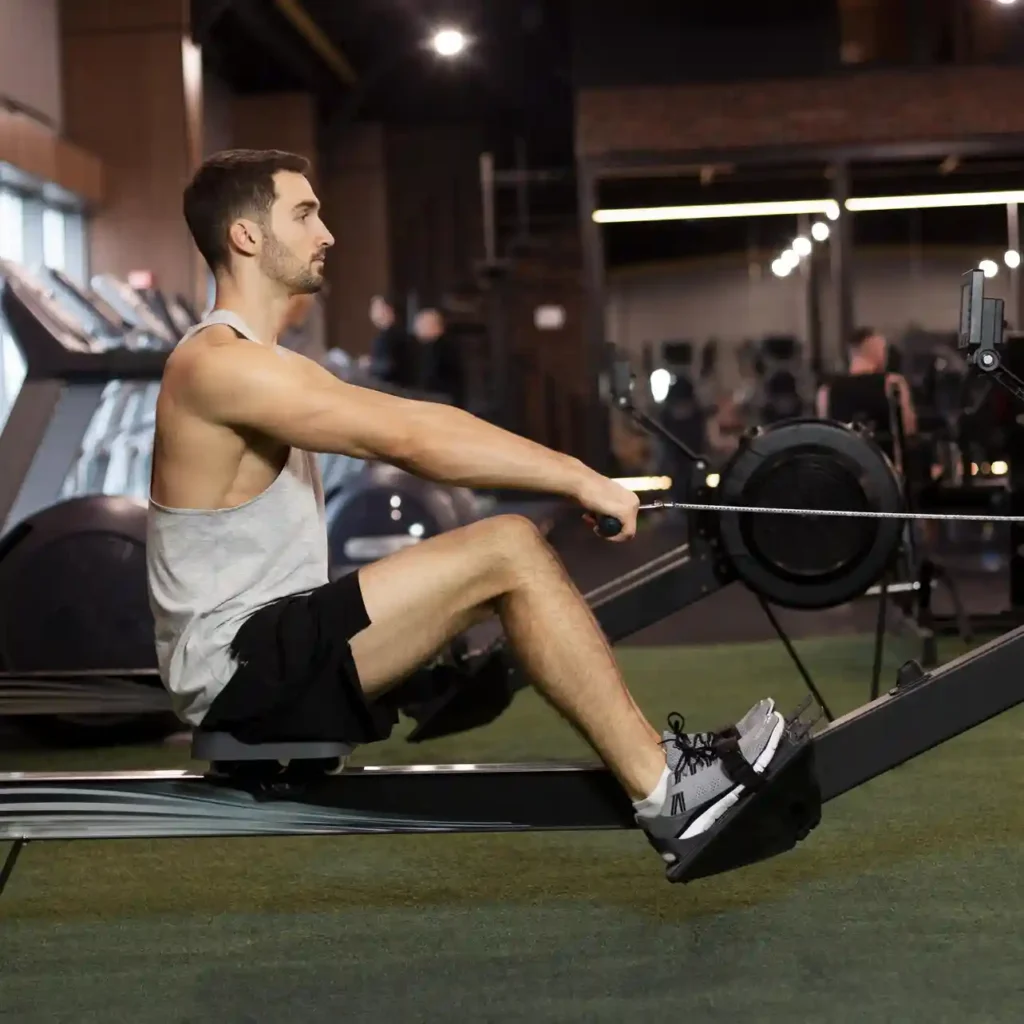
Zone 2 – 500m Row
Focus: cardiovascular power.
Tip: Drive with legs first, then hips, then arms. Keep 24–28 strokes per minute.
Zone 3 – 20 Box Jump Overs
Focus: explosive power + agility.
Tip: Step-downs are safer and more sustainable than rebound jumps.
Zone 4 – 25 Med Ball Sit-Ups
Focus: core strength + coordination.
Tip: Keep heels grounded, control the descent.
Zone 5 – 500m Ski Erg
Focus: upper body endurance + aerobic power.
Tip: Initiate from lats/core, not just arms.
Zone 6 – 100m Farmer’s Carry
Focus: grip strength + postural control.
Tip: Engage core, keep shoulders back, short steps.
Zone 7 – 25 Cal Assault Bike
Focus: max effort cardiovascular conditioning.
Tip: Use both arms and legs equally, aim for steady RPM.
Zone 8 – 20 Dead Ball Overs
Focus: posterior chain + explosiveness.
Tip: Hug the ball close, extend hips fully to lift.
Zone 9 – 100m Tank Push/Pull
Focus: total-body strength and grit.
Tip: Stay low, drive with legs, keep steady pace.
Zone 10 – 20 RAM Burpees
Focus: conditioning under fatigue.
Tip: No tip. All out once it’s the last exercise!
12-Week Deka Fit Training Plan
Weeks 1–4 – Foundation Phase
- Easy runs (3–5km, Zone 2 HR).
- Basic strength (squats, deadlifts, push-ups).
- Technique practice for each zone.
Weeks 5–8 – Build Phase
- Interval runs (6 × 400m at race pace).
- Strength focus (compound lifts 5–8 reps).
- Partial Deka simulations (5 zones + runs).
Weeks 9–12 – Race-Specific Phase
- Full simulations (all 10 zones with 500m runs).
- Tempo runs (20–30min sustained).
- Reduced volume in final week (taper).
Example weekly schedule:
| Day | Session | Focus |
|---|---|---|
| Mon | Strength (lower body) | Squats, deadlifts, lunges |
| Tue | Interval run + core | 6 × 400m + sit-ups |
| Wed | Conditioning circuit | Row + Ski Erg + Assault Bike |
| Thu | Strength (upper body) | Bench, pull-ups, farmer’s carry |
| Fri | Rest or mobility | Yoga, stretching |
| Sat | Long run (6–10km) | Aerobic base |
| Sun | Deka simulation | 5–10 zones at pace |
Nutrition and Recovery for Deka Fit
Research shows that athletes who optimize recovery perform better and get injured less (Milewski et al., J Pediatr Orthop, 2014).
- Carbohydrates → main energy source for high-intensity events.
- Protein → 1.6–2.2g/kg/day for muscle repair.
- Hydration → steady fluid intake, add electrolytes in long sessions.
- Sleep → 7–9h per night. Poor sleep is linked to higher injury risk.
Race Day Strategy
- Warm-up (15–20 min): light jog, dynamic stretches, short intervals.
- Pacing: go steady on first 3 zones — don’t burn out early.
- Transitions: practice moving quickly between zones.
- Mindset: break the race into small goals (“just finish this run, then the next zone”).
Common Mistakes to Avoid
- Ignoring running volume.
- Overloading strength at the expense of endurance.
- Never practicing full simulations.
- Poor pacing (going out too fast).
Final Thoughts
Deka Fit is a true test of hybrid fitness — combining running, strength, and mental grit. With a structured 12-week training plan, solid nutrition, and smart recovery, you can go from complete beginner to race-ready.
👉 Ready to take your training to the next level? Explore our Hybrid Base and Hybrid Elite programs for personalized, science-backed coaching designed for events like Deka Fit.
References
- Bishop, D. et al. (2019). High-Intensity Interval Training in Athletes: Optimizing Training Programs. Sports Medicine, 49(4): 689–702.
- Seiler, S. & Tønnessen, E. (2009). Intervals, Thresholds, and Long Slow Distance: The Role of Intensity and Duration in Endurance Training. Sports Science, 13(1): 32–53.
- Milewski, M.D., et al. (2014). Chronic Lack of Sleep is Associated with Increased Sports Injuries in Adolescent Athletes. J Pediatr Orthop, 34(2): 129–133.
Disclaimer: This training guide is an independent resource created for educational purposes. It is not affiliated with, sponsored by, or endorsed by DEKA™ or Spartan Race, Inc. All trademarks mentioned are the property of their respective owners.